

Summary
The 3DREDO project is a pioneering initiative focused on transforming plastic and composite waste into high-performance reinforcement for concrete structures. Traditionally, concrete relies on steel bars for strength, but steel is heavy and prone to corrosion over time. This project explores a sustainable alternative by using 3D printing to create internal “skeletons” from recycled materials, diverted from landfills and industrial waste streams.
The project team is led by Dr. Alireza Rahimi and Dr. Pouyan Ghabezi from the University of Galway. They collaborated with FutureCast to develop specialized filaments made from waste polymers like Polypropylene and High-Density Polyethylene. By reinforcing these plastics with chopped carbon fibres, the team produced durable, 3D-printed lattice structures that can be embedded in concrete.
These architected lattices, such as honeycomb-like designs, allow for superior crack control and energy absorption compared to unreinforced concrete. This innovation not only makes concrete structures more resilient but also promotes a circular economy by turning non-biodegradable waste into valuable construction assets. Ultimately, the 3DREDO team has provided a roadmap for sustainable, high-performance structural systems that reduce the environmental footprint of the built environment

3DREDO represents an innovative shift in how reinforcement systems for concrete structures can be designed and manufactured by combining additive manufacturing with sustainable material reuse. By transforming waste polymer and composite materials into customized 3D-printed reinforcements, the project addresses both environmental challenges and structural performance limitations simultaneously. This approach has the potential to enhance ductility, durability, and efficiency while reducing reliance on traditional corrosion-prone materials and minimizing construction waste. Beyond technical advancement, 3DREDO demonstrates how circular economy principles can be practically integrated into construction processes, opening new pathways toward more resilient, cost-effective, and sustainable infrastructure.

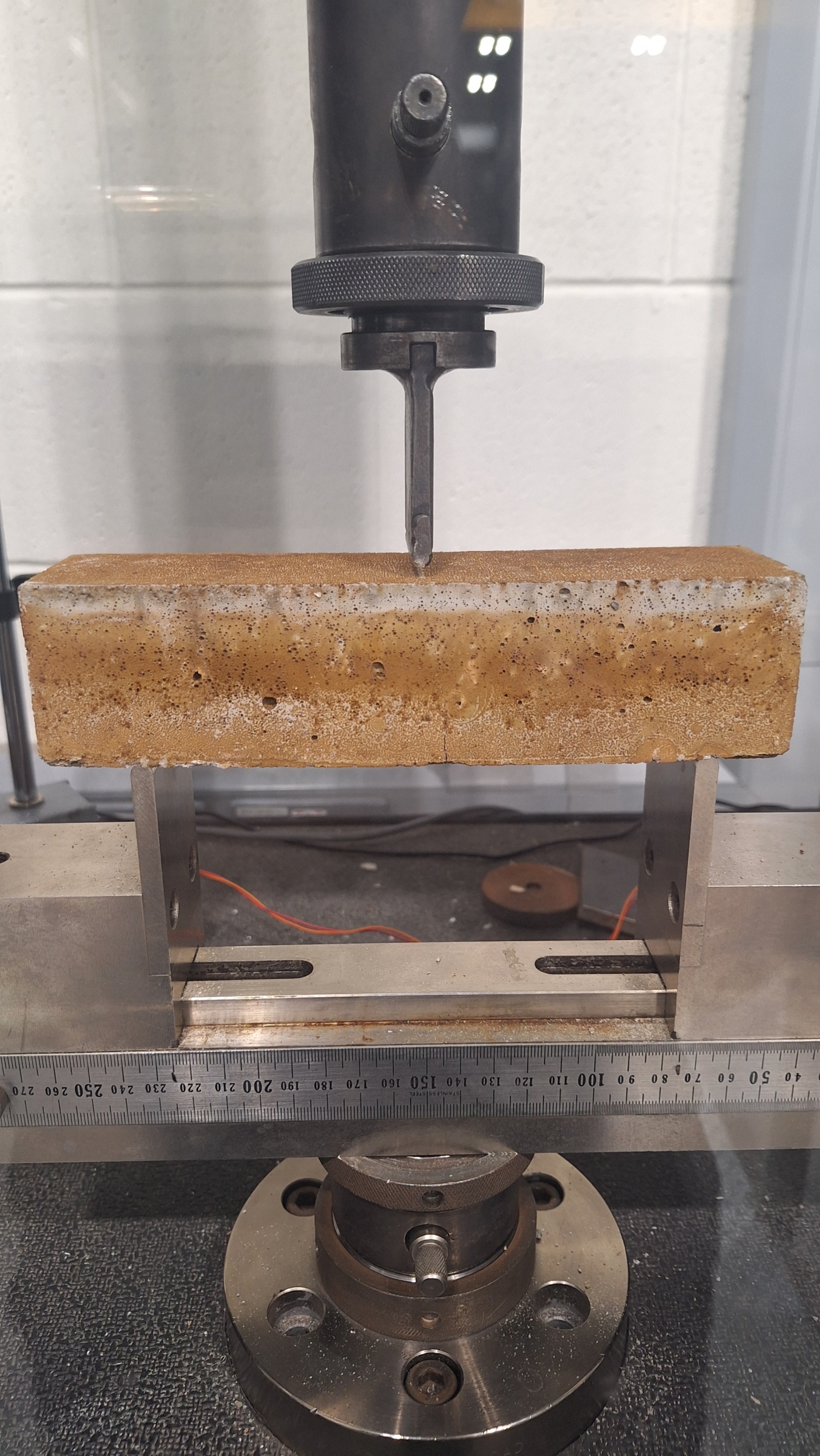
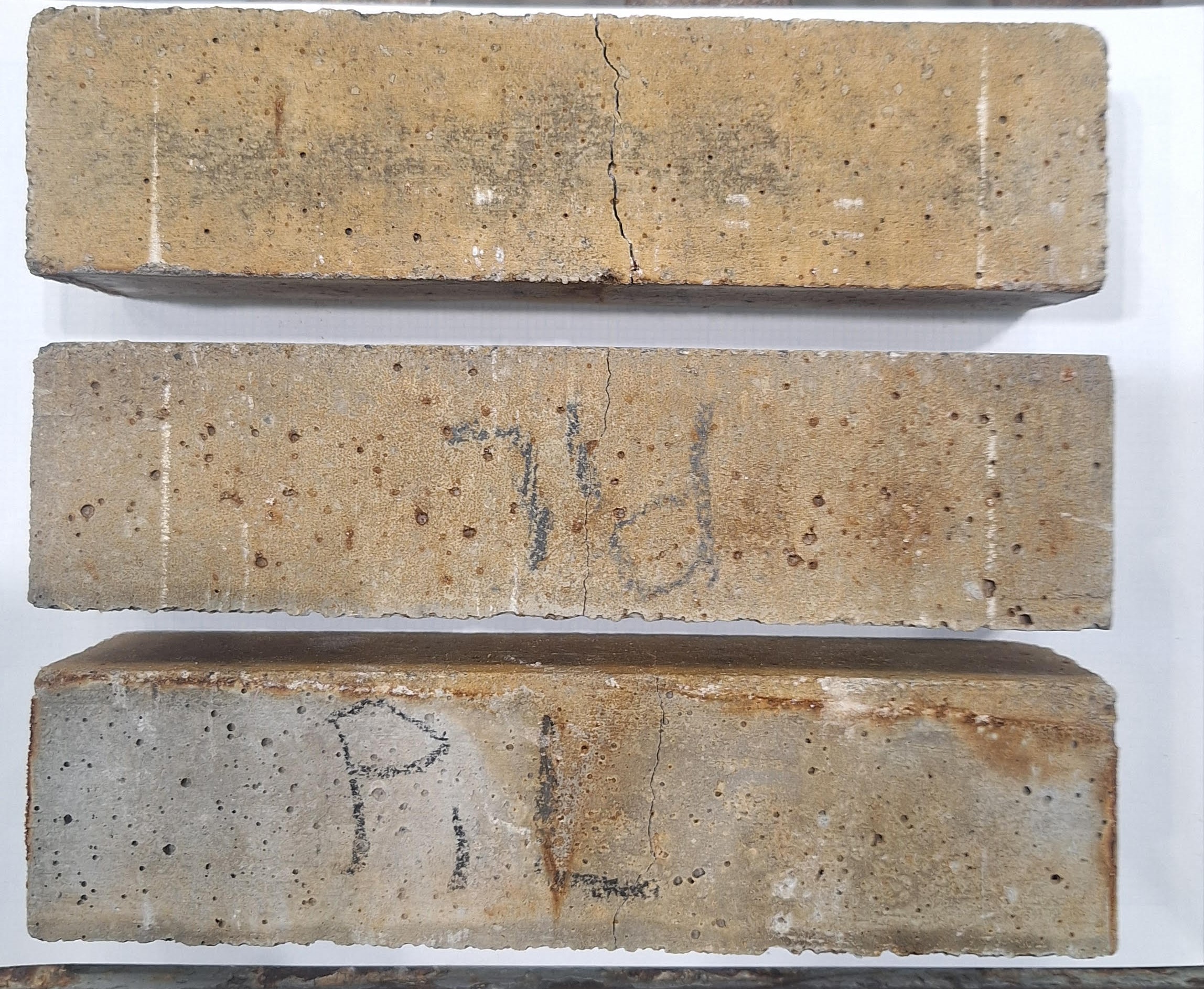
Image: Three-point bending test and corresponding crack propagation results for concrete specimens reinforced with 3D-printed lattice structures.
Scale of the Challenge
Concrete, while cost-effective and strong under compression, is inherently brittle and performs poorly under tension, leading to early degradation. While steel reinforcement is traditionally used to mitigate this, it introduces significant issues such as corrosion and high maintenance costs, particularly in aggressive environments. Simultaneously, the construction sector is pressured to manage vast amounts of non-biodegradable polymer and composite waste from household and industrial sources, which typically end up in landfills or incinerators. The challenge lies in developing a high-value up-cycling pathway that reintegrates these complex, heterogeneous wastes into the construction value chain. This requires overcoming technical hurdles in filament fabrication and 3D printing, such as ensuring material consistency, overcoming poor adhesion and warping during printing, and achieving an optimal balance between recycled material content and structural performance.
Key Results
Project demonstrates that 3D-printed polymer composite lattices successfully serve as effective internal reinforcement for concrete, offering a greener alternative to steel. The team identified that Polypropylene (PP) and High-Density Polyethylene (HDPE) reinforced with 15 wt% chopped carbon fibres provided the best balance of tensile strength and printability. Specifically, PP-carbon fibre lattices exhibited higher stiffness and peak load support, while HDPE-carbon fibre versions showed superior ductility and energy-absorbing capacity. Compared to unreinforced concrete, these architected lattices significantly improved crack control, post-peak performance, and overall energy absorption. The study highlighted that lattice topology—particularly nodal connectivity and load-oriented strut patterns—is more critical than cell size for enhancing reinforcement efficiency. Ultimately, the researchers proved that discarded industrial waste can be transformed into high-quality reinforcement, supporting a circular economy and providing a foundation for sustainable, high-performance structural systems.
Project Partners


Principal Investigator

Dr Alireza Rahimi
Postdoctoral research associate at the University of Galway
Dr. Alireza Rahimi is a highly accomplished researcher specializing in sensor fusion, composite structures, and additive manufacturing. With a Ph.D. in Mechanical Engineering, his work focuses on cutting-edge advancements in robotics, sensor fusion, nanocomposite materials, and deep learning applications in engineering. Currently, as a Postdoctoral Research Associate at the University of Galway since January 2025, Dr. Rahimi leads the development of automated quality control systems for 3D concrete printing (3DCP). His work involves designing sensor networks, integrating real-time data analytics, and collaborating with industry partners to drive sustainable, efficient construction practices. His focus is on reducing waste, optimizing material use, and advancing Industry 4.0 innovations in additive manufacturing.

Dr. Pouyan Ghabezi
Assistant Professor – Lecturer above the bar at University of Galway
Experienced Researcher with a demonstrated history of working in the higher education and industry. Skilled in composite materials, Material characterization, additive manufacturing, 3D printing technology, and FEM modeling. Strong research professional with a Doctor of Philosophy – PhD focused in composite material from University of Tehran.
Podcast episode
Related content